
24/7 Emergency Tree Services in Alderwood, WA
The Time Is Always Right to Call Us
Tree emergencies happen unexpectedly and with little notice. Trees in your neighborhood may be damaged by strong storms, causing a heavy branch to break off and land on your home. Strong winds can cause a healthy tree to fall into your driveway. Sudden failures of the structure of a tree can cause debris to fall onto homes, cars, electrical wires, or other personal property. It is at this time that you will want to have an experienced tree care service provider to respond to your tree emergency as quickly and safely as possible.
Alderwood Manor Tree Care has a dedicated emergency response team working for you 24 hours per day / 365 days per year. Our team understands that tree emergencies occur when they occur, and there are no schedules to keep, nor does our team. When you contact our emergency number, you will speak directly to a knowledgeable representative who will evaluate your situation and send out a crew based on the severity of the emergency and potential risks to the public and/or your property.
We send out emergency crews that are well-equipped with all necessary equipment, safety gear, and experience to handle almost any type of hazardous tree condition. Once we receive a call for service, we work to protect your property and remove any potentially hazardous trees or branches, and to minimize additional property loss and restore your safety. Alderwood Manor Tree Care is ready to assist you with your emergency, whether it is caused by a storm, a sudden failure of a tree, or any other unforeseen tree related emergency.
Emergency Situations We Handle
Tree Emergencies are Unpredictable
Several types of tree emergencies require specific tools and skills. When a tree emergency occurs, it is critical to get help immediately.
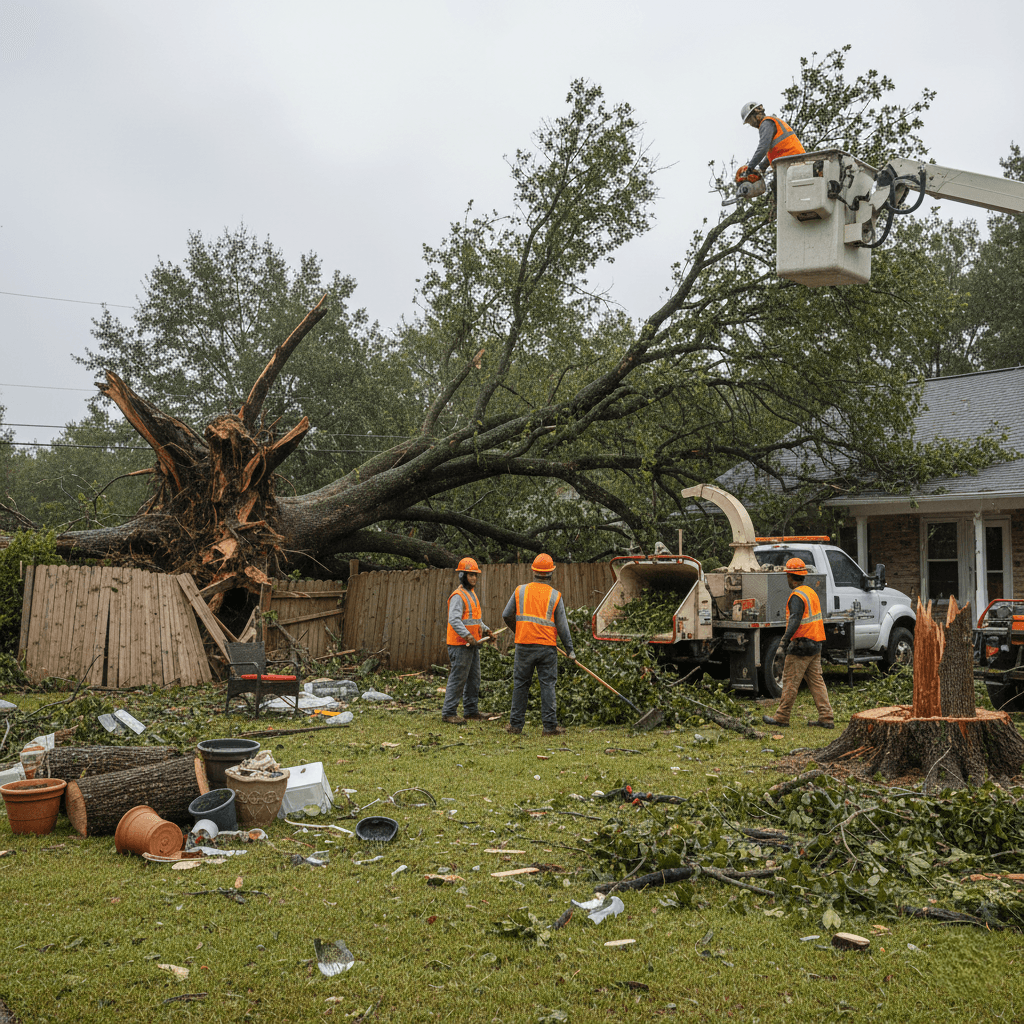
Trees Falling Onto Homes or Garages – Trees or large branches that have fallen onto houses, garages, sheds, or other buildings require prompt attention by a professional arborist. If branches remain on the roof of the house, it will eventually compromise the structure of the building, and trying to cut down the tree yourself can make things worse. Our crews use specialized rigging equipment to safely remove the tree from the home, minimizing any additional damage.
Cars Damaged By Fallen Trees – If a tree has crushed a car, truck, or recreational vehicle, our goal is to carefully remove as much of the tree as possible so as not to damage the vehicle any further than it already is damaged. We will work to carefully lift the branches and trunk off the vehicle and then remove them as needed. We will also communicate with your insurance company as needed.
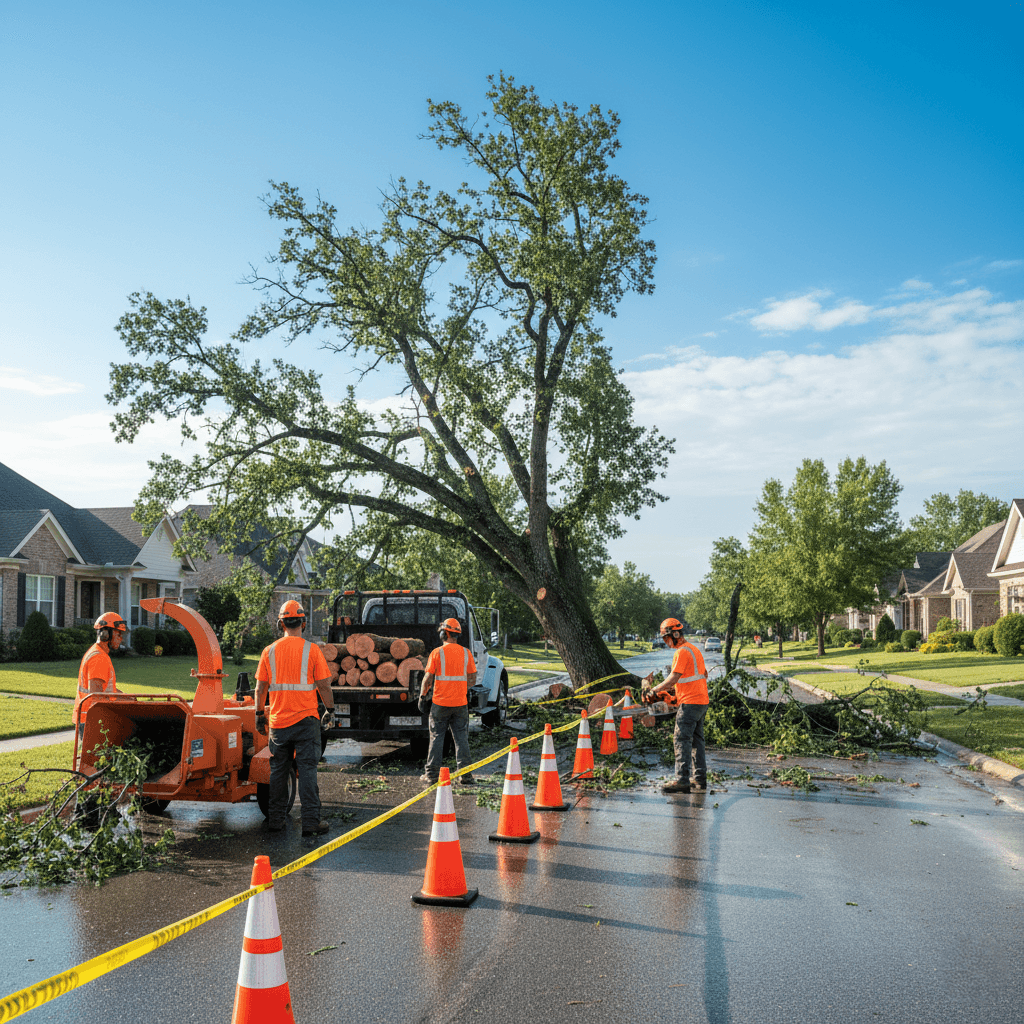
Driveway & Roadway Obstruction – When a tree falls into the driveway, it blocks access to emergency vehicles and traps people inside their homes. A tree that falls across a private road or common area affects an entire community. We respond rapidly to restore access for everyone.
Deadly Hanging Branches – A storm can break a branch, causing it to hang precariously over your head, creating a deadly hazard. “Widow-maker” branches can drop at any time, putting anyone below them in danger. We will safely remove dead hanging branches using ropes and climbing gear to eliminate this threat.
Uprooted Trees With Exposed Roots – Severely uprooted trees with exposed roots can be at risk of breaking free of the remaining root system at any time, and/or a leaning tree can fall at any time if left unattended. We will assess the condition of the tree and provide recommendations on how to protect you and your property until we can safely remove the tree.
Split Trunks – Weather-related problems and structural defects can cause a trunk to split or a major limb to partially fail and leave the tree in jeopardy of failing while you are in the process of repairing/removing the damaged tree. We will assess the damage to the tree and provide options to repair/remove the damaged portion of the tree.
Trees Near Power Lines – If a tree comes into contact with or interferes with power lines, it creates a hazard for electrocution and disrupts electric service. Utility companies typically are responsible for servicing lines that feed into the grid. However, when a tree causes a problem with a service drop (the line that feeds electricity to your house), you will need to hire a tree service that specializes in working near electrical infrastructure. We will work directly with your utility company and follow all safety guidelines when removing a tree that is interfering with electrical wires.
Get A Free Quote
Crisis Response Equipment & Capabilities
Specialized Emergency Tree Removal Equipment
There are specific pieces of emergency response equipment that will help us to remove trees as quickly and as safely as possible under adverse weather conditions.
All Weather Access Vehicles – Our emergency response vehicles with four-wheel drive can travel to your location regardless of road conditions such as mud, debris, and/or steep terrain. In addition to our emergency response vehicles, we also have a trailer to transport all necessary equipment to respond to your emergency needs.
Portable Lighting Systems – Nighttime emergency responses require sufficient lighting to be able to operate safely. We utilize portable light towers and powerful work lights to enable our crews to operate safely at night.
Rigging and Hoisting Equipment – The more complicated tree removals require extensive rigging equipment (rope, pulley, winch, etc.), which enables controlled disassembly of the tree in its compromised position. Our inventory has a wide range of rigging equipment to handle branch loads up to multi-ton tree sections.
Professional Grade Chainsaws – We maintain multiple professional-grade chainsaws in various sizes to ensure we can efficiently cut through any type of timber. Additionally, battery-powered chainsaws enable quiet operation in sensitive noise areas.
Portable Wood Chipper – Branches processed by a portable chipper reduce debris volumes significantly, resulting in less disposal costs and time. When a larger emergency occurs, we can send multiple wood chippers to the site.
Aerial Work Platforms – Bucket trucks and aerial lifts enable our crews to safely access damaged trees, thereby providing a safe working platform for both cutting and rigging operations, especially where climbing may be too hazardous.
Crane Services – For those extremely hazardous emergencies (such as large trees on structures, trees over power lines, etc.), we have access to local crane services that can assist in removing the hazard as soon as possible.
Personal Protective Equipment and Safety Supplies – In addition to utilizing proper safety equipment such as hard hats, safety glasses, gloves, steel-toed boots, first aid kits, radios, and safety fencing, we take the responsibility of protecting our personnel very seriously to prevent injuries to our crews while operating in an emergency environment.
Safety Protocols for Emergency Tree Work
Creating a Safe Environment for People and Property
Due to the increased risk associated with emergency tree removal, additional safety protocols must be followed.
Assessing Scene Safety – Before beginning any emergency tree removal operation, we must first assess any scene safety issues that could impact our ability to safely remove the hazard. This assessment includes identifying any potential hazards such as downed power lines, gas leaks, unstable structural elements, underground utilities, and/or any environmental hazards. Once we identify these hazards, we will define safe work zones and restricted areas to keep unauthorized personnel at a safe distance.
Hazardous Electrical Conditions – When a tree comes into contact with downed power lines, the hazardous condition can pose a serious threat to death. We do not perform any tree removal operations until confirmed by the utility company that all electrical conductors are de-energized. In addition, we always maintain a safe clearance from all electrical equipment and infrastructure.
Structural Instability of Surrounding Buildings – If a tree has fallen onto a structure or against a structure, there is an increased potential for damage to the structure’s integrity. As part of assessing the site for any hazardous conditions before performing any tree removal operations, we also assess the structural integrity of any surrounding structures. If there is a reasonable possibility that a collapsed building could occur, we evacuate the area where the collapse is most likely to occur.
PPE For All Emergency Operations – When performing emergency tree removals, all of our crew members are required to use Personal Protective Equipment (PPE), including hard hats, eye protection, ear protection, cut-resistant clothing, and steel-toe boots. The high visibility aspect of their clothing enables us to see each other while operating in low-light conditions, such as at night or in heavy rain.
Communication Systems – Communication is key to successful emergency operations. Crew members are required to communicate constantly throughout the duration of emergency operations via radio. Communication through radios enables us to coordinate efforts and respond quickly to changes in the situation, should it become unsafe.
Monitoring Weather Conditions – While performing emergency tree removals, we continually monitor weather conditions. If the weather becomes hazardous, such as lightning, extreme wind conditions, etc., we suspend operations immediately due to the hazardous nature of continuing to operate in those conditions.
Crowd Control – During emergency operations, curious onlookers and pedestrians can become a safety concern. To eliminate this problem, we establish and maintain barriers to restrict unauthorized access to our designated work zones.