Alderwood Manor Tree Care - Frequently Asked Questions
General Questions About Our Services
Do you operate with full licensing and insurance?
Absolutely. Alderwood Manor Tree Care carries comprehensive general liability insurance and workers’ compensation coverage for all employees. We maintain all required business licenses and pesticide applicator certifications. We’re happy to provide certificates of insurance before starting any work, and we can add you as an additional insured when required. Our insurance protects both our team and your property, giving you complete peace of mind.
What is your response time for emergency tree services?
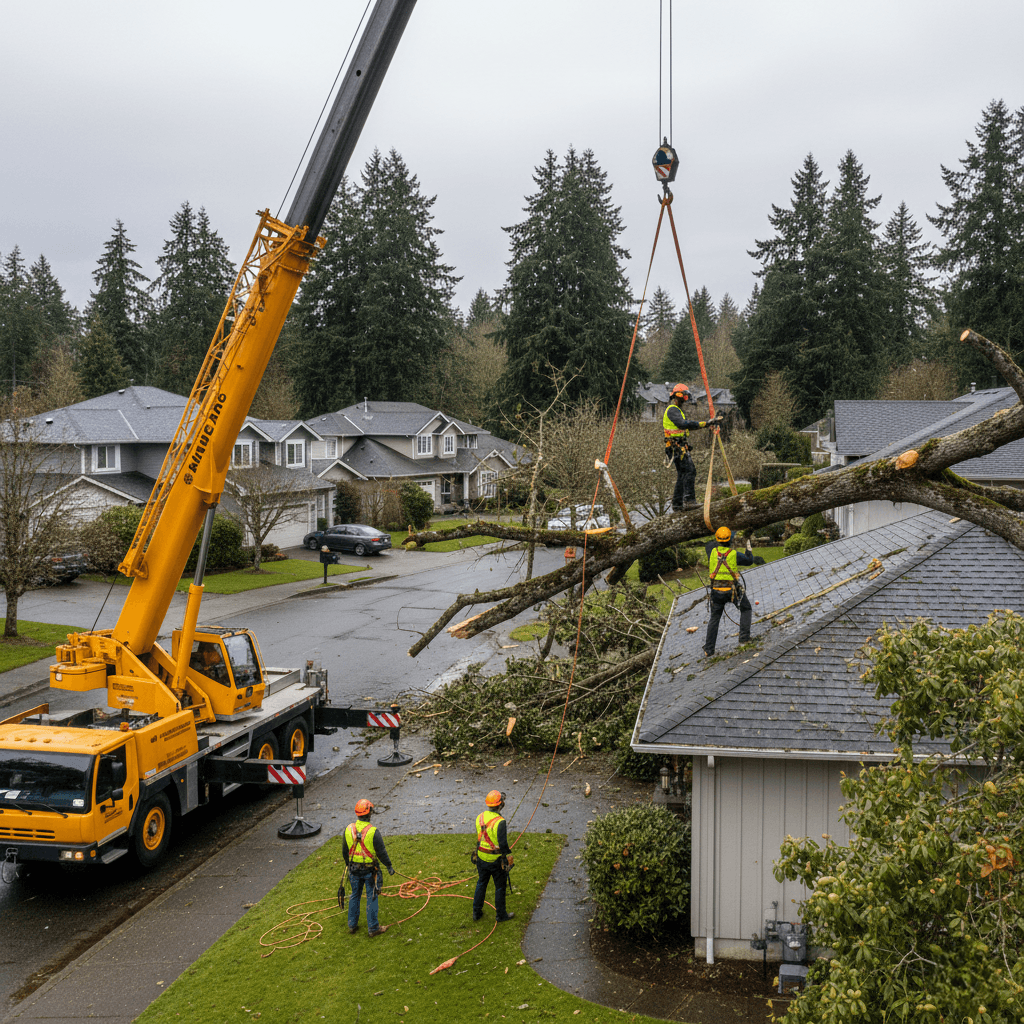
For true emergencies—such as trees on structures, blocking access, or creating immediate safety hazards—we typically respond within 1-2 hours. Our emergency hotline is available 24/7, including nights, weekends, and holidays. When you call, you’ll reach a real person who can dispatch our crew immediately. Response times may extend during major storm events affecting many properties simultaneously, but we prioritize based on life safety and property threat severity. For urgent but non-emergency situations, we usually provide same-day or next-day service.
Do you give cost estimates at no charge?
Yes, we provide complimentary estimates for all tree services. One of our certified arborists will visit your property to assess your trees, discuss your needs, and provide a detailed written estimate at no charge. We believe you should have clear information about the scope of work and what’s involved before making any decisions. Simply call us or fill out our contact form to schedule your free estimate.
Do I need a permit to remove a tree on my property?
It depends on your location, the tree’s size, and local regulations. Some municipalities in the Alderwood area require permits for removing trees above certain diameter thresholds, while others have few restrictions on private property. Trees in critical areas, heritage trees, or those in HOA-governed communities may also require approval. We’re familiar with local tree ordinances and can help determine if permits are needed for your situation. When permits are required, we assist with the application process and provide necessary documentation.
What conditions must be met for the city to approve tree removal in Lynnwood?
Acceptable reasons for tree removal include documented hazardous conditions, dead or diseased trees confirmed by an arborist or city inspector, severe conflicts with infrastructure such as driveways or building foundations, and trees located in areas designated for development. Proper documentation must be submitted during the permit application process.
Do I need to notify my neighbors about tree removal in Alderwood Manor?
Lynnwood requires property owners to comply with public notice provisions for certain tree removal activities. While specific public posting requirements depend on the class of permit and type of work involved, professional communication with neighbors is considered a best practice for maintaining positive community relations.
What budget should I expect for tree removal services in the Alderwood Manor area?
Tree removal costs in Lynnwood typically range based on complexity: smaller trees generally cost between $400–$700, mid-sized specimens range from $800–$1,800, while large or hazardous trees often exceed $2,500. Final pricing depends on specific site conditions and regulatory compliance requirements particular to the Alderwood Manor area and Lynnwood jurisdiction.
Will you clean up all the debris after tree work?
Yes, complete cleanup is included in all our services. We remove all branches, wood, and debris from your property, rake the work area, and leave your site clean and tidy. For tree removals, you can choose to have us haul away all the wood or leave some for your use as firewood. We use wood chippers to process branches into mulch, which can be removed or left on your property for landscaping. Our goal is to leave your property in better condition than we found it.
What does stump grinding typically cost in the Alderwood Manor area?
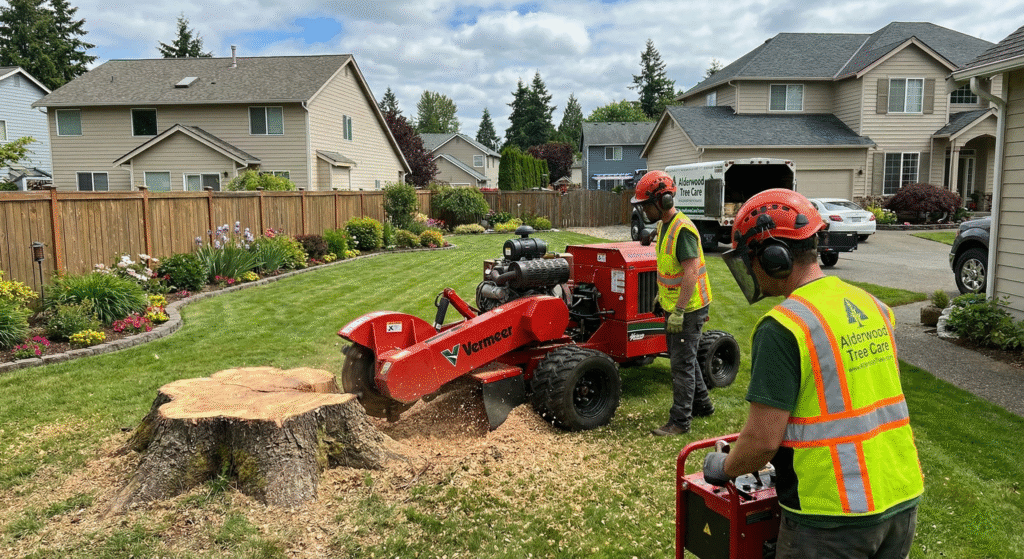
Stump grinding services in Lynnwood generally cost between $250–$550 per stump, depending on stump diameter, root system complexity, and site accessibility challenges. Grinding addresses the visible stump and surface roots while leaving the main root system to decompose naturally underground.
Are emergency tree removal services more expensive in Lynnwood?
Yes. Emergency services incur premium pricing to cover urgent scheduling, potential overtime labor, specialized equipment for hazardous situations, and the immediate availability needed for storm damage or imminent safety hazards. Storm response services operate year-round in the Alderwood Manor area.
How can I tell if a tree on my property is dead or in decline in Lynnwood?
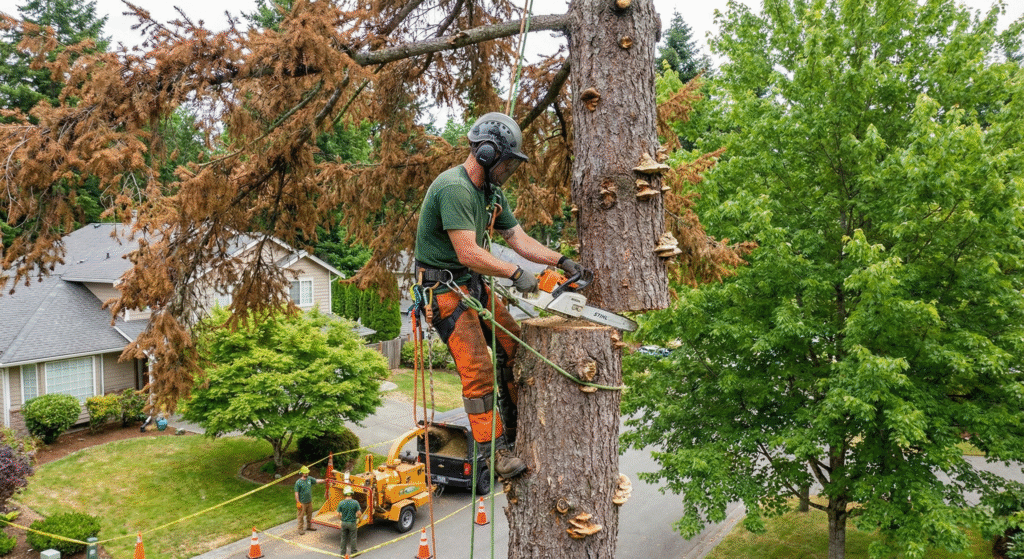
Warning signs include branches remaining leafless throughout the growing season, brittle branches that crack easily, visible bark separation or peeling, fungal growth or mushrooms at the base, a hollow sound when the trunk is tapped, or excessive dead wood accumulating throughout the canopy. If you observe multiple indicators, consult a certified arborist for professional assessment.
Are chemical stump removal treatments effective in Lynnwood?
Chemical treatments may accelerate natural stump decomposition over an extended period, typically several months to years, but are generally insufficient as a standalone solution. Professional grinding or excavation provides faster, more reliable results and eliminates potential regrowth. For permanent removal, mechanical methods are recommended.
May I trim branches from my neighbor's tree that hang over my property line in Lynnwood?
Washington law permits you to prune branches extending onto your property up to the property boundary line, but only from your own side without trespassing onto your neighbor’s land. You must exercise care not to damage the tree’s overall health or structural integrity, and you cannot throw debris back across the property line onto your neighbor’s property.
Who is responsible if a neighbor's tree damages my property in Washington State?
Washington follows the “act of God” doctrine—if a healthy tree falls due to a storm or unforeseeable natural event, the property owner’s homeowner’s insurance typically covers damages. However, if the tree displayed obvious signs of neglect, hazardous condition, disease, or damage that the owner knew about or should have recognized, the neighbor may be held liable for resulting damages.
What's the best time of year to have trees trimmed or removed?
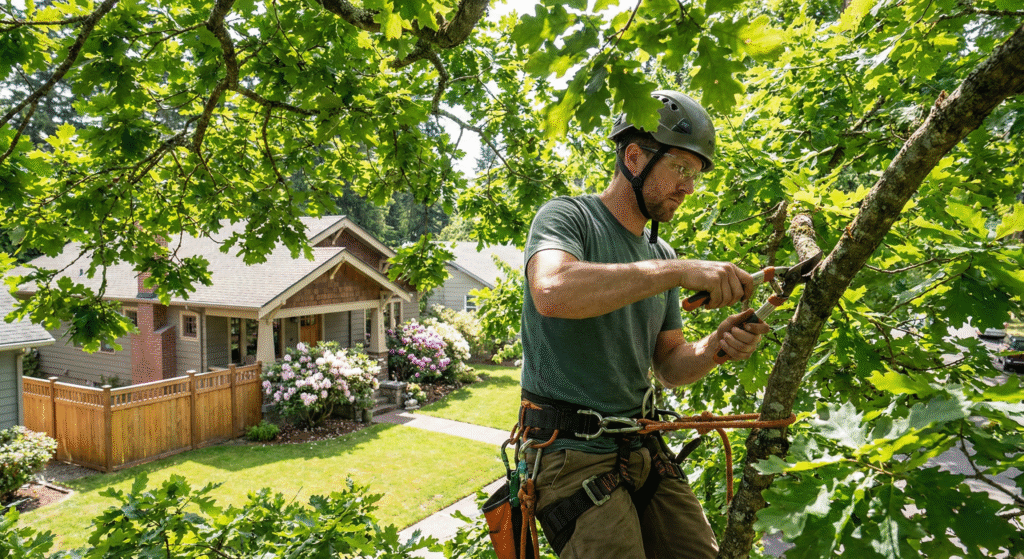
Tree removal can be performed year-round without concern—the season doesn’t significantly affect the process. For tree trimming, timing depends on the species and your goals. Most deciduous trees are best pruned during dormancy (late fall through early spring) when you can see the structure clearly and trees tolerate pruning well. However, spring-flowering trees should be pruned right after they bloom. Some trees like maples and birches are best pruned in late summer to avoid sap bleeding. Our arborists will recommend optimal timing for your specific trees during the estimate.
Can I remove trees located on the property line without my neighbor's permission?
No. Under Washington law, trees straddling property lines are considered shared property. Any removal or significant pruning work requires written consent from all affected property owners. Unauthorized removal can result in legal liability, monetary damages, attorney fees, and civil court proceedings.
Will the root system continue growing after a tree is cut down?
Most root systems cease growing once the tree is removed, though certain tree species may produce sprouts from remaining root tissues. Stump grinding or chemical treatment prevents regrowth and accelerates decomposition of underground root material. Professional removal ensures complete elimination of sprouting potential.
How long does the root system take to decompose naturally after tree removal?
Large root systems may require five to ten years for complete underground decomposition in Lynnwood’s climate, depending on soil moisture levels, temperature, tree species characteristics, and the size of the root system. Sandy or well-draining soils typically experience faster decomposition than clay-based soils.
What should I do immediately if a tree falls on my house in the Alderwood Manor area?
First, prioritize safety—evacuate the property if necessary and avoid any contact with power lines or downed electrical wires. Document all damage with photographs for insurance claim purposes. Contact your homeowner’s insurance carrier immediately and then call a licensed tree service provider for emergency removal assistance.
Does homeowner's insurance cover tree removal costs following storm damage in Lynnwood?
Insurance typically covers removal expenses when trees damage structures or block essential access routes, but may not cover the removal of fallen trees that cause no property damage. Review your specific policy language carefully and document all damage thoroughly with photos for claim support.
Can I be held liable for damage caused by my trees to neighboring properties in Washington State?
Yes. Under Washington law, property owners can be held liable if they knew or should have known about tree hazards and failed to address them. Washington’s timber trespass statutes provide for monetary damages, attorney fees, and civil liability for tree-related violations or negligence.